What is
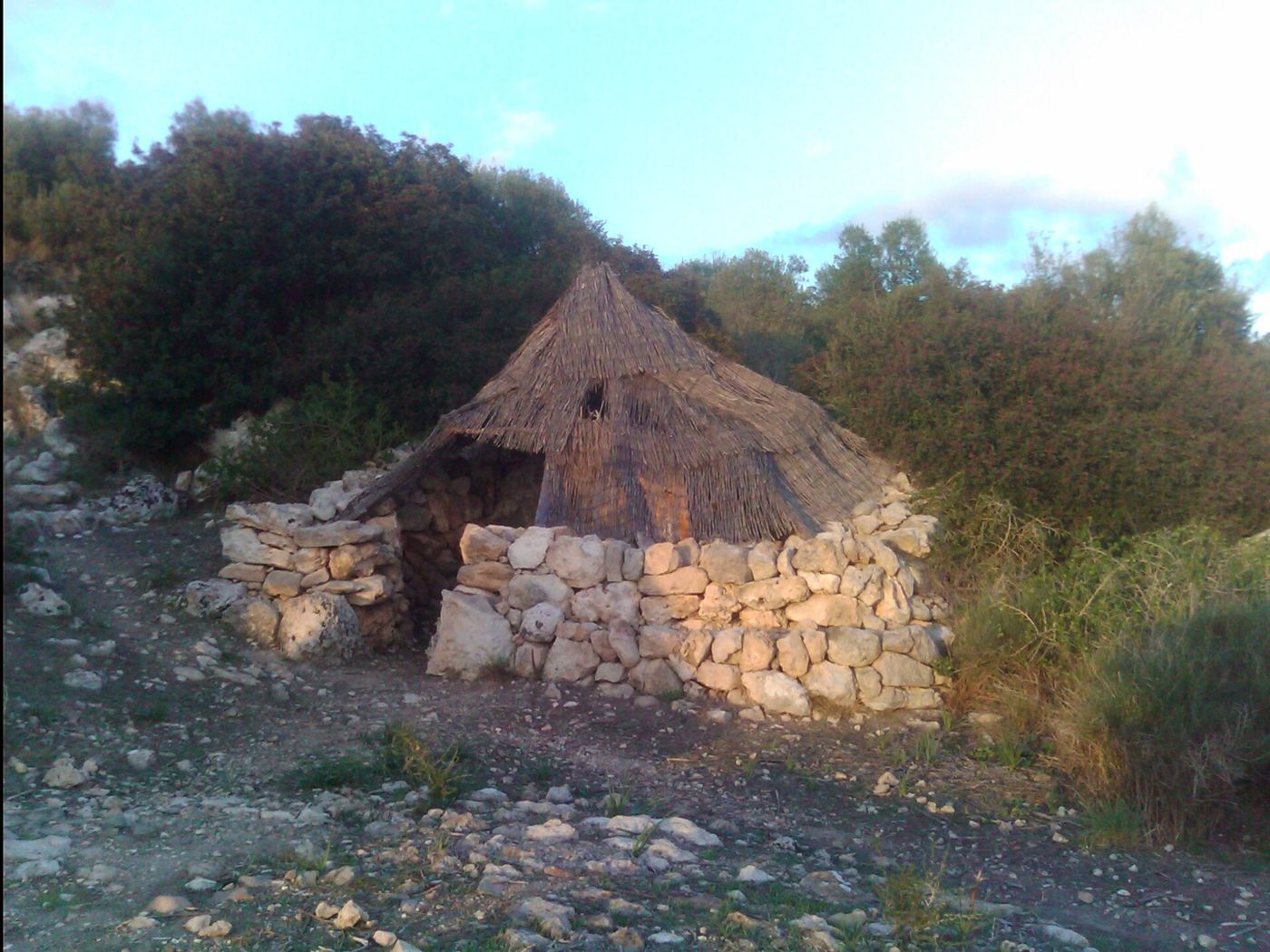
Dry stone cabins where the roter lived: a landless peasant who cultivated a rota, a piece of plowed forest within a possessió, in exchange for part of the harvest.
##Com works
- Material from the site: stone dislodged from clearing the garrigue. Without mortar. Logs for the roof (Viquipèdia).
- Compact plant, small door, thick walls: shelter from cold and sun in open lands.
- In Migjorn (Llucmajor) there are barracks and dry stone cassettes in large numbers (TFG UIB, 2018). Forms and types: per verify with that study.
- Fertilizer: ash from firewood burned underground from anthills (formiguers).
Elements and vocabulary
- rota (plowed plot, usually smaller than a quarter, ~0.7 ha), roter, rotate
- barrack, hut, formiguer, garriga, possessió
- Ses Rotes (toponym: plowed slopes)
History
- More numerous Roters in the ss. XVIII–XIX; they decline in the 20th; documented until the 60s.
- They mainly grew wheat; The harvest was distributed according to the quality of the soil.
- In Son Granada and S'Àguila (Llucmajor) there were more than 300 roters.
- Unequal relationship: the lord could demand personal services and control votes (caciquismo).
- Tourism, in the second half of the 20th century. XX, emptied the field of roters.
On veure'n
- Pla i marina de Llucmajor: large concentration of barracks and cassettes.
- Ses Rotes de Caimari (Selva), next to the Camí vell de Lluc: BIC marjades slopes.
- Parc Etnològic de Caimari.
- Roter hut near Cala Figuera (Santanyí), ruin disclosed by mallorca.com.
Stat
No individual protection in general; some in municipal catalogs (Calvià, Llucmajor). The rotes can still be read in aerial photos.
Why is it design
Architecture of poverty, minimal and sufficient. It talks about who built the landscape without owning it. Lesson: Vernacular design is also a social history. It is proximity design .
Avui architecture
No reinterpretation identified.
For the project
- Social chapter of the atlas: roters, missatges, day laborers, who made the landscape.
- Route through the Llucmajor marina with Sofía Azorín's TFG as a guide.
Frequently asked questions
What is Barraques de roter (dry-stone field huts)?
Dry stone cabins where the roter lived: a landless peasant who cultivated a rota, a piece of plowed forest within a possessió, in exchange for part of the…
Sources
- ca.wikipedia.org/wiki/Rota_(agricultura)
- mallorca.com/es/guia/lugares-de-interes/barraca-de-roter
- dspace.uib.es/xmlui/handle/11201/147323?show=full
- serradetramuntana.net/-/pedra-en-sec
- calvia.com/es/contenido-ayuntamiento/resolveuid/a971144a72af4e7796a88a603418f1e9
Working text from the Disseny Indígena knowledge base, machine-translated from Spanish.