What is
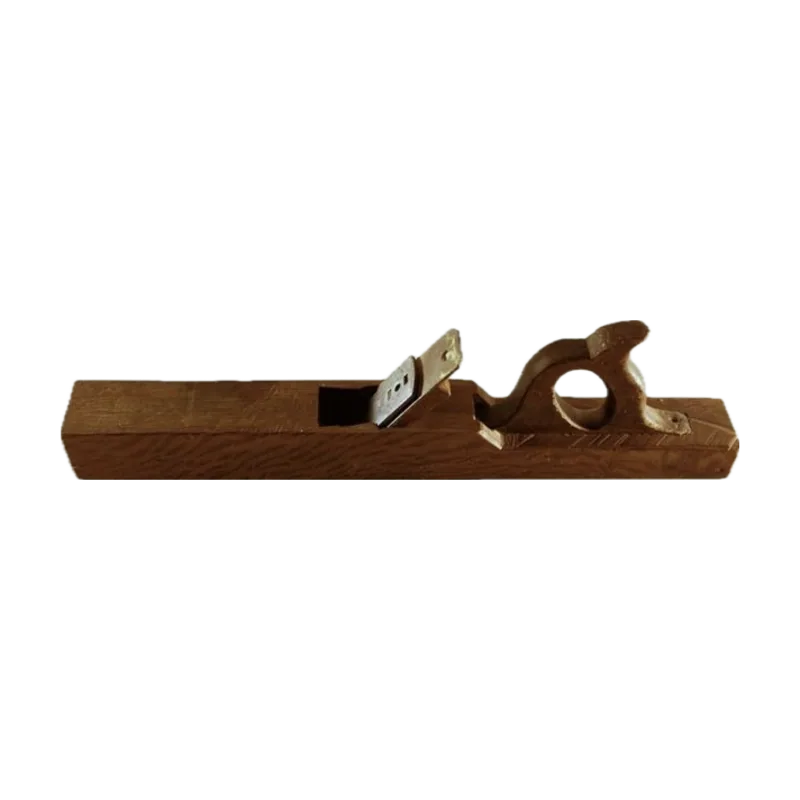
The hand tools of the fuster (carpenter): sawing, planing, drilling, hollowing out and assembling wood. In Mallorca the trade was divided by scales: fuster primater (fine work and furniture), fuster de pla (ordinary furniture) and fuster comú or groller (cars, plows, pieces of sinia) (DCVB).
How is
- Banc de fuster — thick table with four sturdy legs and a tightening screw (DCVB, also Mall.).
- Flat — in the Balearic Islands, the brush (which in other places is ribot). Mallorcan variants: flat bocell (convex face and edge, leaves the wood grooved) and flat turned (curved base, for curved surfaces) (DCVB).
- Garlopa — long brush with a handle, for flattening large boards; in Mallorca it is pronounced with a double l (gal·lopa) (DCVB).
- Xerrac — single blade saw; serra — frame saw.
- Escarpra — chisel: 20-30 cm iron bar with double bevel and striking head (DCVB).
- Gúbia — semicircular edge chisel (gubia).
- Auger — auger with spirals and crossed handle. The wart burr (Mall.) only has the small whorls at the tip.
- Filaberquí — berbiquí, crank with drill bit.
- Gramil, square and compass to mark.
How is fa
- Irons (edges, burrins) from the ferrer or purchased; Brush boxes and handles were made by Fuster himself in hard wood (to verify woods used in Mallorca).
- The flat box is adjusted with a wedge (tascó) that holds the blade (DCVB, sv ribot).
Com s'usa
1. Saw the board to size (serra, xerrac).
2. Flatten with a plank and refine with a plane.
3. Mark with a gramil and square.
4. Open boxes and ears with scarpra and wooden mesh; drill a hole with a burr.
5. Assemble without nails when possible (tenon and mortise, dovetail).
- Workshop work all year round; The common fuster went to the possessió to repair cars and sinies (to verify).
Vocabulary
- fuster: carpenter.
- fuster primater: the one who makes fine work and furniture.
- fuster comú / groller: in Mallorca, the one who makes and repairs carts, plows and sinies.
- plana: carpenter's plane (Bal.).
- plana bocell: convex-faced fluting brush (Mall.).
- plana voltada: curved base brush (Mall., Men.).
- garlopa: long brush with a handle.
- xerrac: saw.
- escarpra: chisel.
- gúbia: gouge.
- barrina: auger; wart burr, the one with spirals only at the tip (Mall.).
- fer barrina: in Mallorca, close a deal (DCVB).
History
- 1388: "unam gubiam" in an inventory published in the BSAL (DCVB, sv gúbia).
- 1432: "ribot gros" in a document cited by Aguiló (DCVB).
- 1774: "ferro garlopas de fusta" (DCVB).
- 20th century: workshop machinery (band saw, thicknesser) replaced a good part of the manual tools.
On veure'n
- Museu de Mallorca, Etnològica Section (Wall) : exhibits carpentry tools (illesbalears.travel).
- Workshops: Fusteria Tomeu Mestre (Sineu) , Fusteria Miquel Mestre (Felanitx) , Fusteria Can Pou (Santa Maria) , MD Fusteria (Manacor) .
Why is it design
- Tool made by the user: brush boxes and handles fitted to the fuster's hand.
- Precise vocabulary: three planes for three surfaces; The name already describes the function.
- Assembly without metal: box and tenon allow the furniture to be disassembled and repaired.
- Scales of the trade: from the cart to the fine furniture, the same adapted kit.
For the project
- Atlas: photographic inventory of the Mallorcan planes (bocell, voltada) in a workshop in Sineu or Felanitx.
- Piece: furniture assembled without hardware with a fuster and a designer.
- Trade: fusteria-mallorquina · ebenisteria-i-moble-mallorqui · torners · carving-i-sculpture-in-whip · fusta-d-olivera .
- Related files: calaixera , caixa-de-nuvia , cadira-de-boga-i-banc , serra-de-bracet .
Frequently asked questions
What is Carpenter's tools (eines de fuster)?
The hand tools of the fuster (carpenter): sawing, planing, drilling, hollowing out and assembling wood. In Mallorca the trade was divided by scales: fuster…
What are the traditional words for Carpenter's tools (eines de fuster)?
Some words: barrina, escarpra, fer barrina, fuster, fuster comú / groller, fuster primater, garlopa, gúbia.
Sources
- dcvb.iec.cat/results.asp?Word=fuster
- dcvb.iec.cat/results.asp?Word=plana
- dcvb.iec.cat/results.asp?Word=garlopa
- dcvb.iec.cat/results.asp?Word=ribot
- dcvb.iec.cat/results.asp?Word=barrina
- dcvb.iec.cat/results.asp?Word=escarpra
- dcvb.iec.cat/results.asp?Word=gúbia
- dcvb.iec.cat/results.asp?Word=xerrac
- dcvb.iec.cat/results.asp?Word=banc
- illesbalears.travel/en/mallorca/museum-etnologic-de-muro
Working text from the Disseny Indígena knowledge base, machine-translated from Spanish.